
How to read an agricultural call for proposals
An agricultural call for proposals is not a brochure about how much the country loves rice. It is a dated invitation that says who may apply, on what problem, with what budget ceiling, by which deadline, and in which format. People search how to read one because they start writing the science before they have underlined the eligibility line — and then a strong idea dies on a missing annex. This page is the order of reading. It is not a promise of funding and not the text of any one trust or ministry. The call in your hand is the law of that round. A previous year’s PDF is a different law.
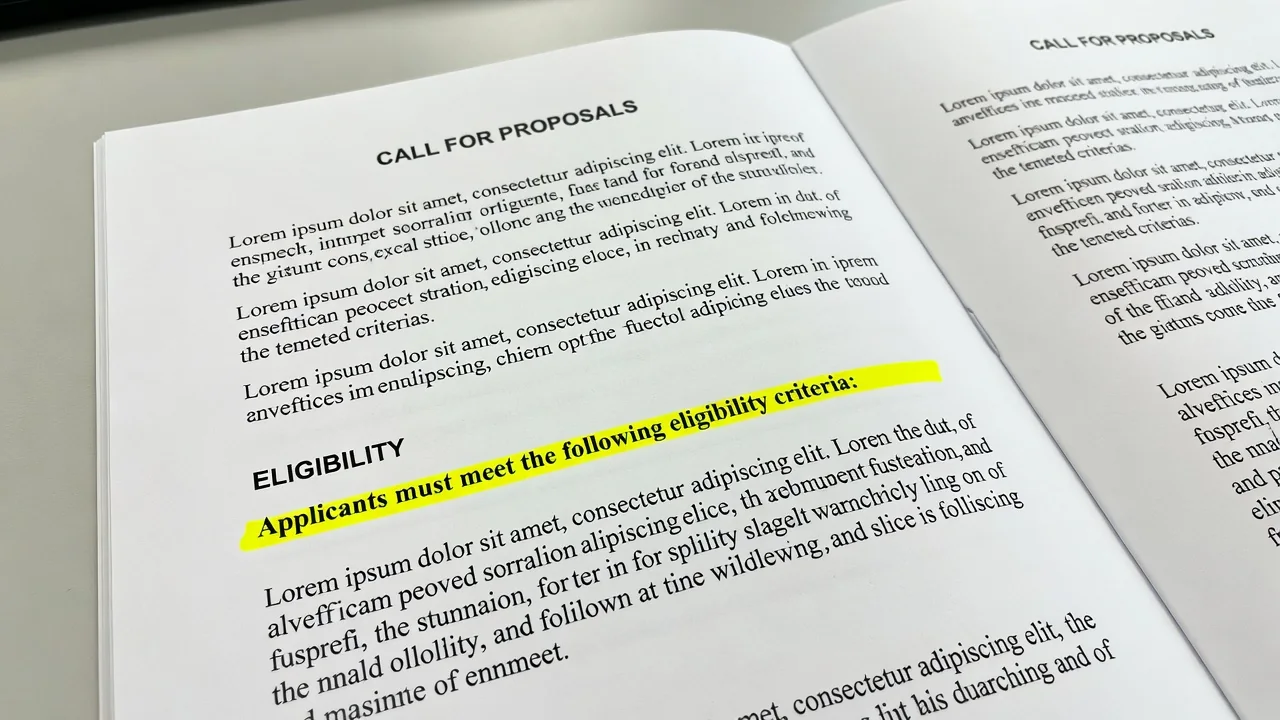
Open the live call, not the copy someone forwarded last season. Highlight four blocks before you write a sentence of justification: eligibility, priority themes, budget and duration, submission packet. If your institution or your passport cannot stand in the eligible box, the rest of the poetry does not matter. If the theme is on-farm water and you have written a lab protocol with no farmers, you are answering a different advertisement.
The four blocks, before the literature review
Eligibility: who leads, who partners, whether government stations must be on the page, whether a private firm is allowed. Themes: the exact phrases the call will score, not the theme you wish they had written. Budget: ceiling, eligible costs, whether farmer stipends and fuel are in or out. Packet: page limits, fonts, forms, letters, CVs, and whether the portal clocks midnight in Dhaka or somewhere else. A brilliant methods paragraph that overruns the page limit is not brilliant. It is non-compliant. Write the compliance checklist on the wall. Science comes second on purpose.
- Read eligibility and deadline twice before you open the methods file.
- Copy the theme language you will be scored on. Do not invent a neighbouring theme.
- Check whether on-farm work is required or only encouraged. Required means farmers in the design, not in the last paragraph.
- Build the packet list first. Missing letters lose faster than a weak paragraph.
- A previous winner’s proposal is not a template if the call changed.
| Block | You extract | If you skip it |
|---|---|---|
| Eligibility | Who may lead / partner | Ineligible lead, unread science |
| Theme | Scored priorities | A good project for last year |
| Budget / months | Ceiling and eligible lines | A plan you cannot fund |
| Packet | Forms, limits, clock | Late or non-compliant file |
The risk of writing the dream project first
Principal investigators who start with the experiment they have wanted for five years will force the call to fit. Calls do not fit. They select. If your idea is good and ineligible, park it and write the eligible one, or find a partner who makes it eligible before the clock. Submitting the dream anyway wastes reviewers and a year of your calendar. Clarification windows close. A question sent after the window is a diary entry, not a change to the call.
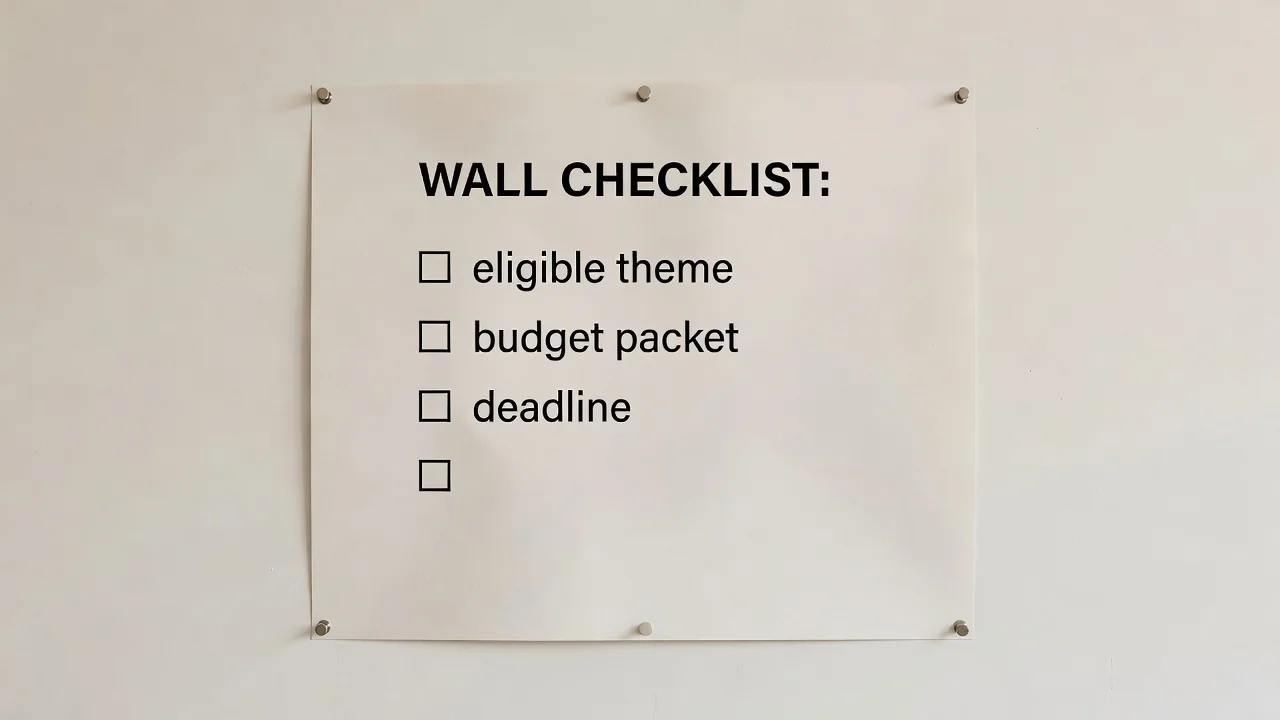
What to put on the wall the day the call drops
Eligibility, theme language, budget ceiling, packet list, deadline with time zone. Then, and only then, the science. The call is an invitation with rules, not a canvas. Reading it in that order is how a fundable idea stays fundable — and how a beautiful ineligible idea is spared a year of false hope.